
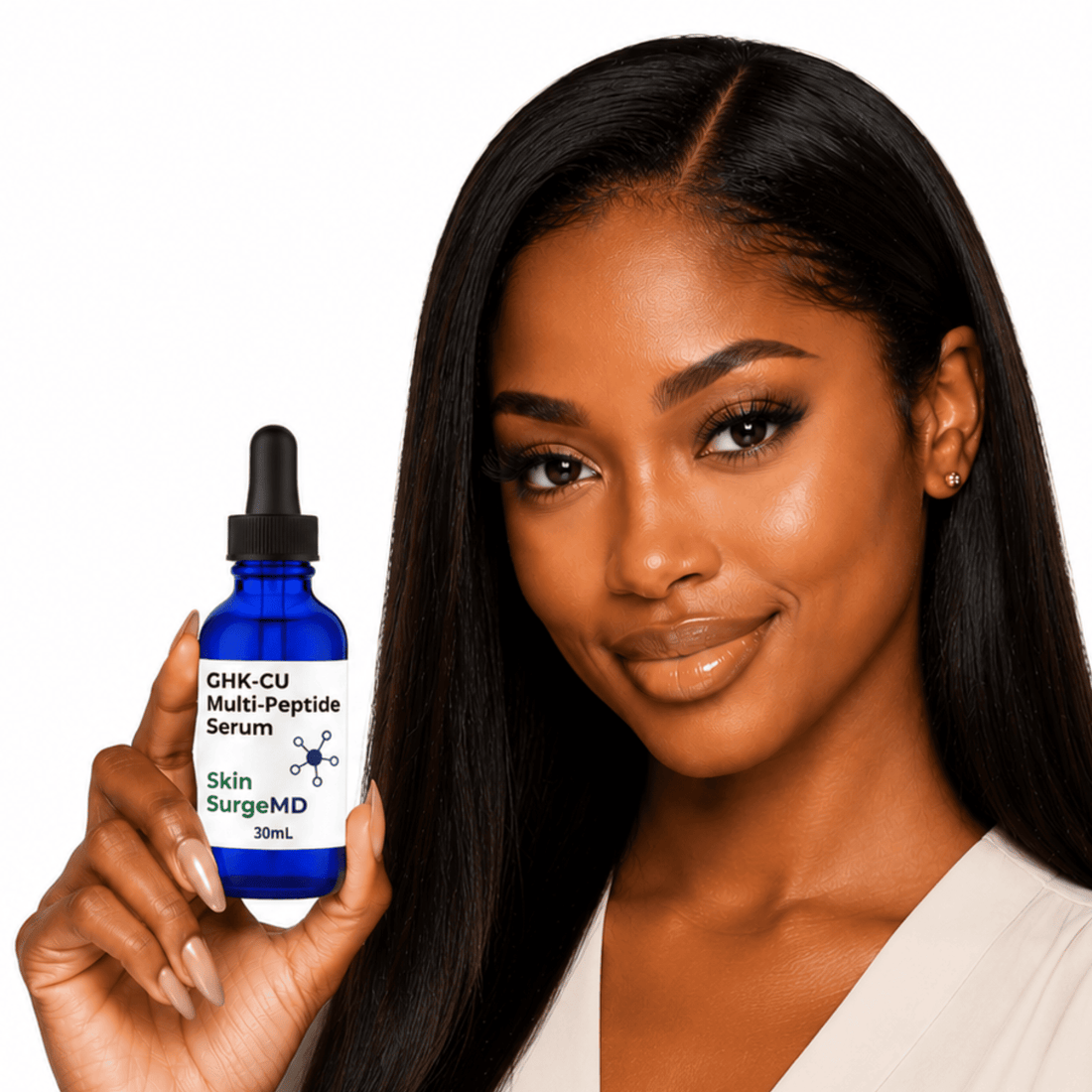
GHK-Cu Benefits: Why Copper Peptides Are One of the Most Powerful Ingredients in Anti-Aging Skincare
Patricia BrownShare
If you've been exploring the science behind next-generation skincare, you've likely encountered GHK-Cu — a copper peptide compound that's quietly become one of the most researched and respected actives in anti-aging dermatology. Here's what the science says, and why it deserves a place in your routine.
What Is GHK-Cu?
GHK-Cu (glycyl-L-histidyl-L-lysine copper) is a naturally occurring copper peptide complex found in human plasma, saliva, and urine. First identified in the 1970s by Dr. Loren Pickart, GHK-Cu plays a critical role in wound healing, tissue remodeling, and cellular regeneration.
As we age, GHK-Cu levels in the body decline significantly — dropping from approximately 200 ng/mL at age 20 to around 80 ng/mL by age 60. This decline correlates closely with the visible signs of skin aging: loss of firmness, increased fine lines, slower healing, and diminished radiance.
Topical application of GHK-Cu has emerged as a clinically supported strategy to replenish this deficit and restore youthful skin function.
The Science-Backed Benefits of GHK-Cu
1. Stimulates Collagen and Elastin Production
GHK-Cu is one of the most potent known stimulators of collagen synthesis. Studies show it activates fibroblasts — the skin cells responsible for producing collagen, elastin, and glycosaminoglycans — leading to measurably firmer, more resilient skin over time.
2. Accelerates Skin Repair and Wound Healing
Originally studied in the context of wound healing, GHK-Cu has been shown to speed up tissue repair, reduce inflammation, and support the formation of healthy new skin. This makes it particularly valuable for post-procedure recovery, acne scarring, and compromised skin barriers.
3. Powerful Antioxidant and Anti-Inflammatory Action
GHK-Cu neutralizes free radicals and modulates inflammatory pathways, helping to protect skin from oxidative stress caused by UV exposure, pollution, and environmental aggressors. Chronic low-grade inflammation — often called "inflammaging" — is a primary driver of premature aging, and GHK-Cu directly addresses it.
4. Remodels the Extracellular Matrix
Unlike many actives that simply stimulate collagen production, GHK-Cu also regulates matrix metalloproteinases (MMPs) — enzymes that break down damaged collagen. This dual action (build new, clear old) results in a more thorough skin remodeling effect.
5. Improves Skin Density and Thickness
Clinical studies have demonstrated that regular use of GHK-Cu increases skin density and thickness — two key markers of youthful skin that decline with age. Thicker skin is more resilient, more hydrated, and less prone to fine lines.
6. Reduces Fine Lines and Wrinkles
Multiple double-blind studies have shown that topical GHK-Cu formulations significantly reduce the depth and appearance of fine lines and wrinkles, with results comparable to — and in some cases exceeding — retinol, without the associated irritation.
7. Supports Hair Follicle Health
Beyond the face, GHK-Cu has demonstrated the ability to enlarge hair follicles and stimulate hair growth, making it a compelling ingredient in scalp and hair care formulations as well.
How GHK-Cu Compares to Other Anti-Aging Actives
| Ingredient | Collagen Stimulation | Irritation Potential | Suitable for Sensitive Skin |
|---|---|---|---|
| GHK-Cu | ✅ High | 🟢 Very Low | ✅ Yes |
| Retinol | ✅ High | 🔴 High | ⚠️ With caution |
| Vitamin C | ✅ Moderate | 🟡 Moderate | ⚠️ Formulation-dependent |
| Niacinamide | ⚠️ Indirect | 🟢 Very Low | ✅ Yes |
| Peptides (general) | ✅ Moderate | 🟢 Low | ✅ Yes |
GHK-Cu stands out for delivering high-efficacy results with an exceptional tolerability profile — making it suitable for virtually all skin types, including sensitive and reactive skin.
How to Use Copper Peptides in Your Routine
Timing: GHK-Cu can be used morning and/or evening. Many experts recommend evening use to align with the skin's natural overnight repair cycle.
Layering: Apply after cleansing and toning, before heavier moisturizers. Avoid layering directly with high-dose Vitamin C or strong acids in the same step, as these can destabilize the copper complex.
Consistency: Like most peptide-based actives, GHK-Cu delivers cumulative results. Expect to see meaningful improvements in skin texture and firmness within 4–8 weeks of consistent use.
Concentration: Look for formulations with GHK-Cu listed in the first half of the ingredient list, or in dedicated peptide serums where it is the hero active.
Who Should Use GHK-Cu?
GHK-Cu is an excellent choice for:
- 30s and beyond — when natural GHK-Cu levels begin to decline noticeably
- Post-procedure skin — supporting recovery after peels, lasers, or microneedling
- Sensitive skin types — seeking collagen support without retinol-related irritation
- Anyone targeting fine lines, loss of firmness, uneven texture, or dullness
Shop Our GHK-Cu Formulations
Ready to experience the benefits of copper peptides? Explore our clinically formulated GHK-Cu collection:
- 2% GHK-CU Serum + EGF, Argireline, Marine Collagen, Vit B5 — our hero copper peptide serum for comprehensive anti-aging
- GHK-Cu Cream for Loose, Wrinkly, Crepey, or Sagging Skin + Ceramide — targeted treatment for skin laxity
- 6% Syn-Ake Serum (Snake Venom Peptide) + GHK-Cu + EGF — advanced multi-peptide formula for deep wrinkle correction
- 10% GHK + 5% AHK Triple Peptide Hairline & Brow Serum + Growth Factors — copper peptides for hair and brow density
The Bottom Line
GHK-Cu is not a trend — it's one of the most extensively studied peptide compounds in dermatological science, with decades of peer-reviewed research supporting its efficacy. As the skincare industry continues to move toward precision, evidence-based formulations, copper peptides represent exactly the kind of intelligent, results-driven ingredient that belongs at the center of a serious anti-aging routine.
At Skin SurgeMD, our formulations are built around clinically validated actives like GHK-Cu — because your skin deserves more than marketing claims.
References
- Pickart L, Margolina A. Regenerative and Protective Actions of the GHK-Cu Peptide in the Light of the New Gene Data. Int J Mol Sci. 2018.
- Finkley MB, et al. The effect of the tripeptide-copper complex on photoaged facial skin. J Cosmet Dermatol. 2007.
- Gorouhi F, Maibach HI. Role of topical peptides in preventing or treating aged skin. Int J Cosmet Sci. 2009.